

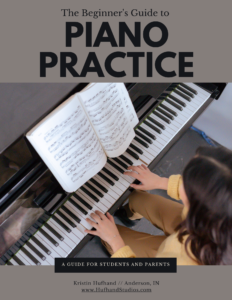
As a music teacher, it can be incredibly difficult to encourage students to practice piano consistently. It becomes even more difficult if students don’t even know how to do this effectively. In this article, we will walk through the most important steps to practice piano including when to practice and the steps to effective practice. Make sure to check out the link at the bottom to purchase your own studio copy of the ebook The Beginner’s Guide to Piano Practice” which also includes information for parents and helpful checklists!
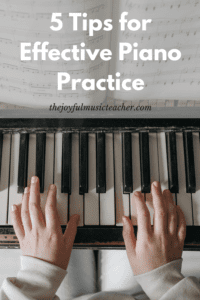
When Should I Practice Piano?
It can be so difficult to figure out how often and when to practice piano. Some people may think that it is best to have long practice sessions, however I have found that more frequent, short practices are key for progress. The first time you should practice is right after your piano lesson! The skills and concepts learned are still so fresh and you’ll be able to have very effective piano practice at that time.
On the other days of the week, a great tool to practice piano effectively is habit stacking.
What is Habit Stacking?
Habit stacking is when you attach (“stack”) a task to the end of a series of other, already established, tasks. For example, if you shower, brush your teeth, then get dressed every morning then you’re already a pro at habit stacking! Perhaps you could practice after dinner or after another weekly activity. Habit stacking is a great way to encourage effective piano practice at all levels.
How to Practice Piano Effectively
Now that you have figured out when you want to practice throughout the week, here are 5 simple steps to practice piano effectively:
- Always keep your music on the piano
- Warm up
- Choose one tricky section to work on
- Make notes in your music
- End on a high note!
1. Always Keep Your Music on the Piano
By keeping your music on the piano, you’re more likely to sit down and play whenever you walk by the piano and see your music open on the stand. When the book is open to a song you enjoy, that increases your chances of playing the piano even more!
2. Warm Up
A warm up is just what it sounds like – a song or series of exercises you play in order to warm up your fingers and brain for more difficult piano practice. While it is common for music teachers to assign technical exercises or scales to complete during weekly practice, I have found that it is much more effective and enjoyable to play a previously mastered song as a warm up. Imagine this – you see music for a song you love open on the piano, sit down, play the beloved song, and then have the energy and motivation to turn the page to your new song and continue playing. By using a beloved song as a warm up, students naturally want to stay at the piano and play longer!
3. Choose One Tricky Section to Work On
Now that you have some motivation at the piano, continue your effective piano practice by choosing one tricky section of your new song to work on. Take your time, play slowly, and make sure you play the tricky section correctly multiple times in a row.

4. Make Notes in Your Music
If you notice that you keep making the same mistake while practicing, stop and make a note in your music! Circle the section, write in the note names, highlight it, whatever you need to do to in order to stop making that mistake again. The important thing is that you put something in your music to make sure your song gets better over time.
5. End on a High Note
The last step in how to practice piano effectively is to end on a high note! Play another song you love or a section of your current song that is mastered.
Now that you know when and how to practice piano effectively, you can master piano in no time!
If you are a music teacher or parent, check out my ebook which takes each of these 5 simple steps into further detail and gives you tips for how to encourage piano practice.
Are you a student looking for an online piano teacher? Head over to this page to learn all about me and what I teach.
If this article was enough information for you, download a free practice checklist today!


One Comment
Pingback: